Plant-floor AI grading

Test Before
You Commit

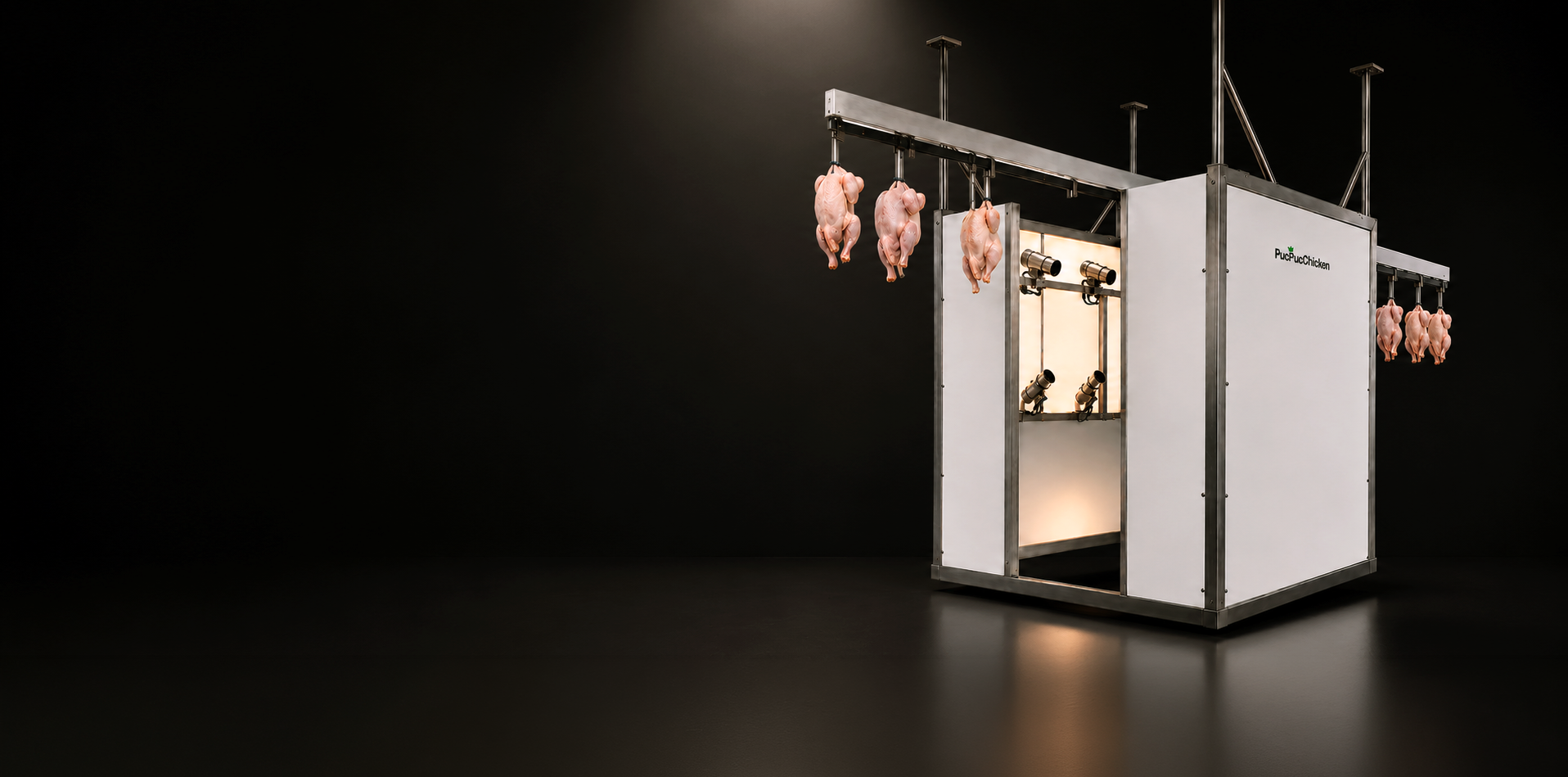
Designed as a ceiling/over-line retrofit around an existing processing line, subject to site survey.

Developed and running on a live U.S. duck-processing line. Chicken validation is the next commercial program.

Request a Plant Walk
Live proof: U.S. duck line Chicken: next validation Site-survey scoped

From capture to action in milliseconds

Watch the line run while the system captures, detects, grades, and sends the event before the diverter.

play_arrowDemo reel See the grading sequence 35-second demo reel 6 camerasMultiple angles Real-time AIOn-device inference Line speedDecision before divert
01
photo_camera

Capture

Current architecture uses six cameras to capture the bird from multiple angles.
02
center_focus_strong

Detect

The current model pipeline has measured approximately 174 ms under the documented configuration.

03
workspace_premium

Grade

Plant-defined grading rules and defect classes are agreed before validation.

04
move_item

Integrate

Integration is scoped during site survey for the selected PLC configuration.

Test the documented configuration.

The documented end-to-end decision path is approximately 175–185 ms in the tested configuration.
Request a Plant Walk

Designed for plant-floor integration, subject to site survey.

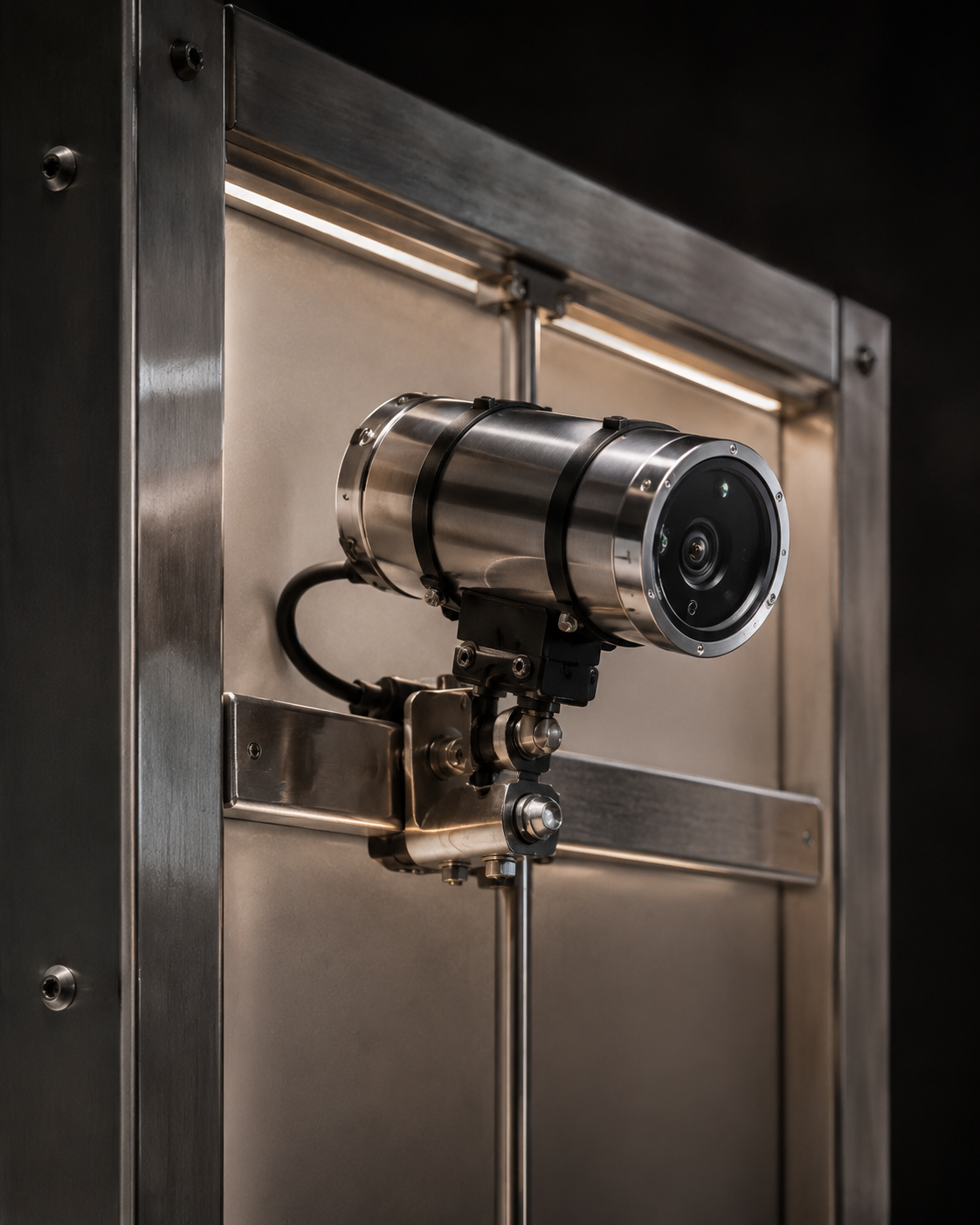
Stainless high-resolution inspection camera

Multiple-angle capture

Current architecture uses six cameras to capture the bird from multiple angles.
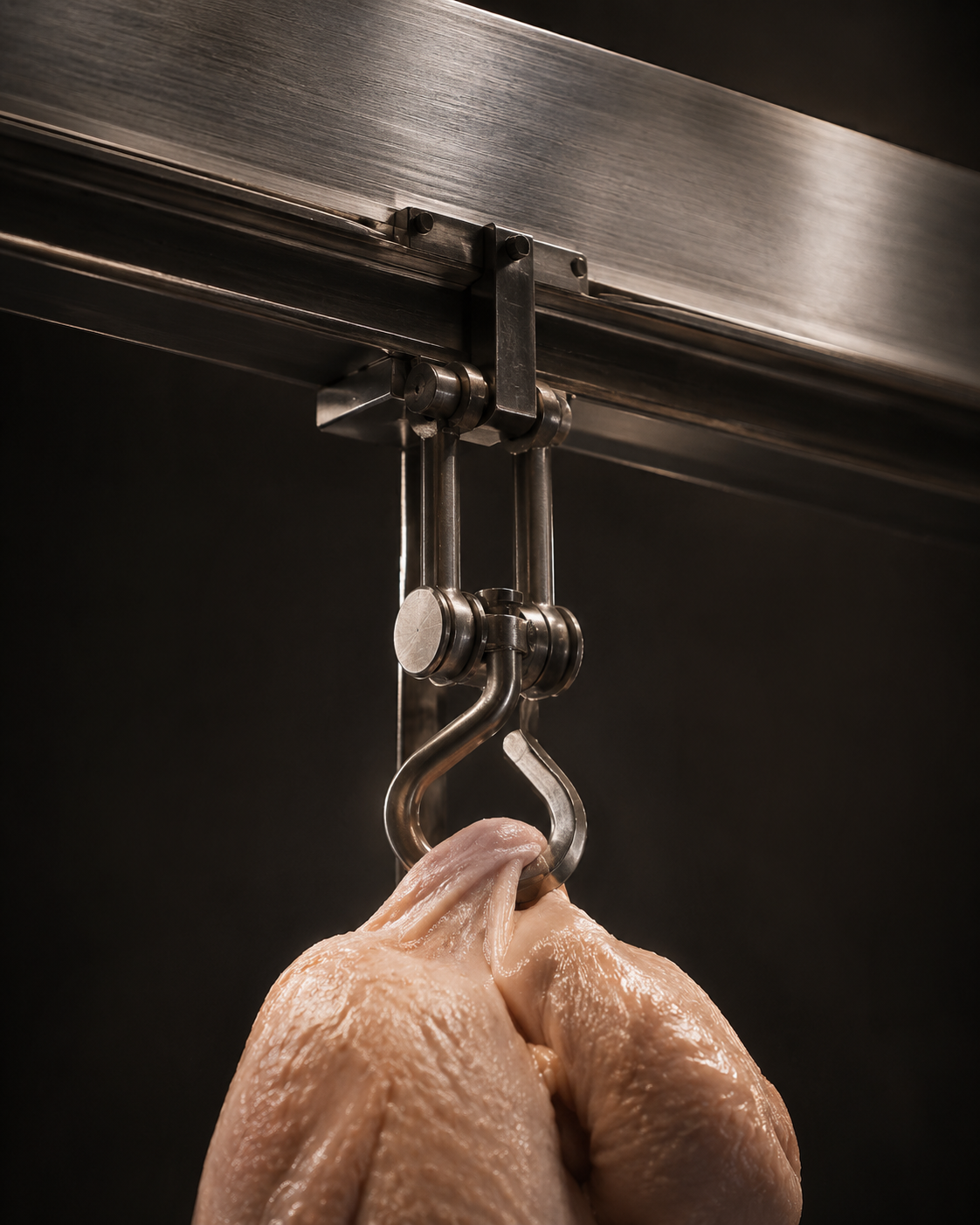
Secure stainless poultry handling hook

Line presentation

Bird presentation, mounting area, and line interface are confirmed during site survey.
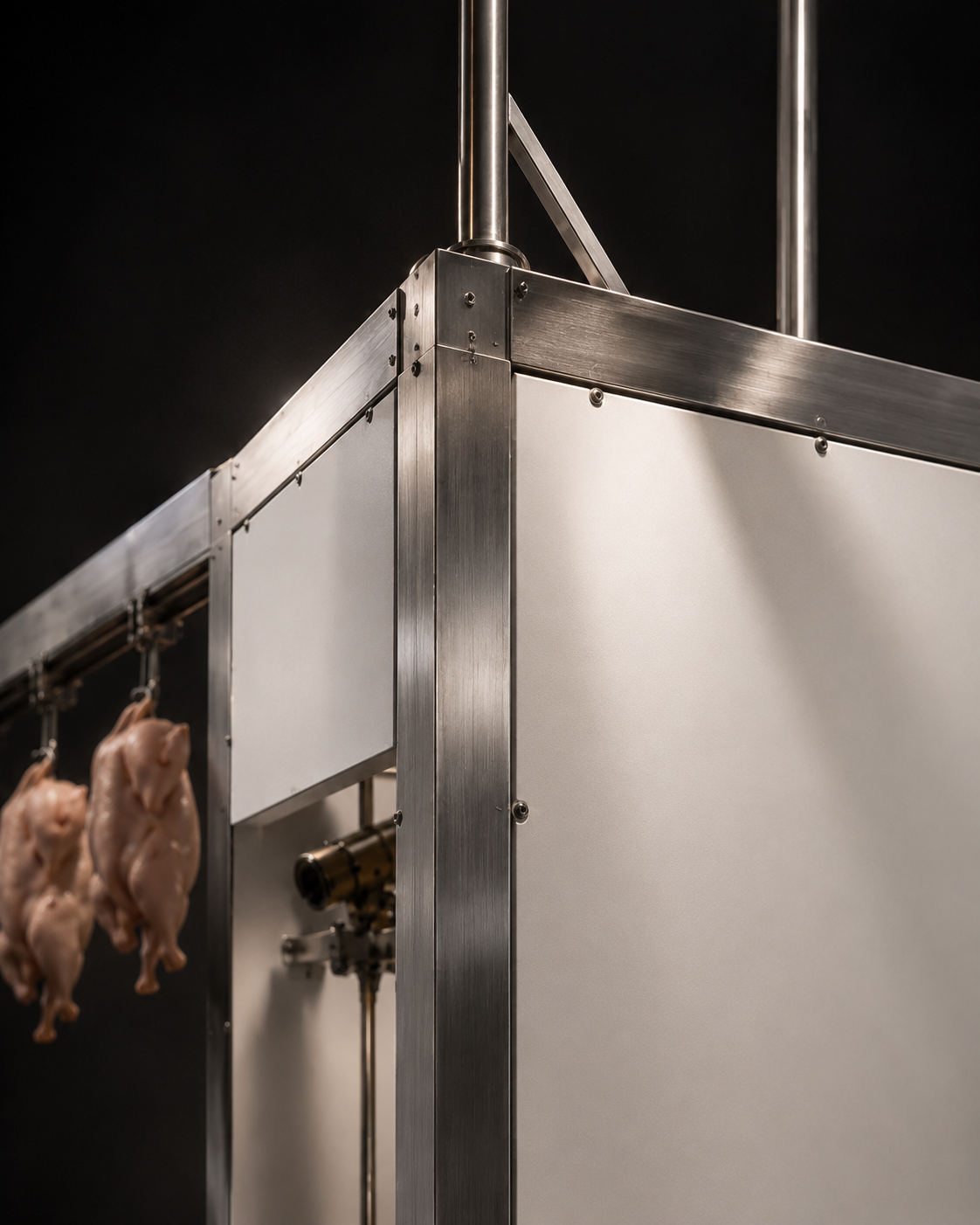
Food-grade stainless enclosure detail

Configured enclosure

Materials, washdown requirements, and electrical scope are finalized during configuration review.
fact_checkSite survey required verifiedDocumented electrical standard publicCE scoped when required ruleOfficial grading requirements remain separate
PucPucChicken

Not just a camera.
A grading brain.

The demo interface shows grading, system-check, reporting, and configuration workflows for review during validation.

32-sec walkthrough

Live grading

See the assigned grade, confidence, defects, line speed, and PLC status in real time.

Shift self-test

Verify cameras, lighting, model detection, I/O signals, and PLC connection before the line starts.

Quality analytics

Track grade distribution, hourly volume, and the defect patterns that need attention.

Production reports

Export weekly and monthly grading reports for operations and quality review.

Production data you can act on.

After each run, the system turns grading into an operations brief: distribution, throughput, rejects, top defect patterns, and the action that should happen next.

  • monitoringGrade mix and throughput by run, shift, or day.
  • troubleshootDefect trends that help quality teams find the root cause.
  • ios_shareCSV or report export for operations, QA, and management review.
Sample run report

Line 2, whole bird grading

06:00 to 14:00 shift, generated at run close

Auto-ready
19.7%Grade A
40.5%Grade B
39.9%Grade C
0%Reject
209/hrThroughput
4,671Birds processed
6/6Cameras online
"Grade A is 19.7%, below the configured target. Review today's top defects."Generated automatically after each production run.
Top defect driversShare of flagged birds
Skin tears31%
Bruising22%
Wing damage16%
QA reviewOpen the defect gallery and confirm the highest-volume downgrade driver.
Line checkCompare defect timing against upstream handling and sanitation notes.
ExportSend the run summary to operations with the shift report.

Two direct paths to return.

The ROI conversation should be simple enough for a plant manager and concrete enough for finance: labor displaced, grade value recovered, and the assumptions used to model both.

Reduce grading labor

Reallocate grading labor, modeled plant by plant.

Model the savings directly from headcount, shifts, and operating days.

What finance sees Loaded hourly labor, shifts per day, operating days, and redeployment assumptions.

Recover grade value

Keep saleable Grade A product from becoming Grade B margin.

Consistent grading helps identify undergrading and supports targeted quality improvement.

What quality sees Grade mix, downgrade drivers, target A yield, and exportable run evidence.
ROI worksheetBuilt from your line, not a generic calculator.
Labor scenarioPlant by plant

Modeled from your headcount, shift pattern, and loaded labor cost.

Grade scenarioA-yield recovery

Modeled from your grade mix and downgrade drivers.

Decision packetExportable proof

Run data, assumptions, and validation path.

How it connectsNo rip-and-replace controls project
Your linePlant PLCLine speed, position, and ready state.
PucPucChickenGrading ControllerAssigns A/B/C and sends the grade event.
Your lineExisting DivertersRoute by the same PLC logic operators already know.
ControlsAllen-Bradley PLC integration via Ethernet/IP.
TimingGrade event reaches the PLC before the divert point.
DataRun exports stay available for QA and ERP workflows.
FootprintCeiling-mounted system keeps the floor clear.

Scoped for
your line.

Designed as a ceiling/over-line retrofit around an existing processing line, subject to site survey.

CamerasCurrent architecture: six cameras, multiple angles
Model pipelineApproximately 174 ms in the documented configuration
Decision pathApproximately 175–185 ms in the tested configuration
ElectricalDesigned/built to the documented standard; not represented as UL Listed
CEScoped when required for the destination market
Line integrationSite-survey scoped; EtherNet/IP and selected PLC configurations described
FootprintCeiling/over-line retrofit, subject to site survey
Planning range8–12 weeks after approved configuration and commercial release
WarrantyProposed one year, subject to final quote and warranty terms
Commercial scopeBudgetary configuration approximately $500,000; final price after scope and site review

Prove it before you buy it.

Start with the level of proof that fits your team. Each path turns the conversation into evidence you can review internally.

Request the validation outline
01 inventory_2

Acceptance design

Agree the bird population, defect classes, ground truth, metrics, and purchase trigger before testing.

You receiveA pre-agreed validation and acceptance outline
02 diversity_3

Evidence review

Review the current duck-line proof that customer permission allows. Reference access is subject to customer permission and NDA.

You receiveA clear record of what is proven and what chicken still needs to validate
03 local_shipping

Plant validation

Validate the system against your own birds and pre-agreed acceptance criteria before the purchase decision.

You receiveA plant-specific evidence package and decision path

The questions plant teams ask first.

Straight answers on performance, integration, downtime, and support. Final acceptance criteria are set around your line and your product.

Our position We prove it on your own birds.
ProofHow accurate is it?
Accuracy, false-positive, false-negative, and repeatability definitions are agreed for the plant's validation. A proposed false-positive criterion is a target, not an achieved result.
Live deploymentCan we speak with a current customer?
Developed and running on a live U.S. duck-processing line. Chicken validation is the next commercial program. Reference access is subject to customer permission and NDA; it is never guaranteed before written approval.
Line fitWill it work with our equipment?
Integration is scoped during site survey. Current materials describe EtherNet/IP and selected PLC configurations.
InstallationHow much downtime should we expect?
Physical installation may fit a planned weekend when the site passes readiness review; validation, training, and acceptance continue afterward.
MaintenanceWho keeps it running?
Proposed standard warranty is one year, subject to the final quote and warranty terms. Maintenance and service scope are finalized with the supplied configuration.
The distinctionIs this another weight grader?
No. Weight grading supports sizing and batching. PucPucChicken makes the quality condition call, assigning A, B, or C. It operates as a quality layer alongside your existing weight-grading process.

The practical
details.

Current planning range is 8–12 weeks after approved configuration and commercial release, subject to supply and site readiness.
Most plants self-maintain using the PM guides and training we provide. Day to day, it is keeping the camera glass clean and the enclosure cool. If you would rather we handle service visits, we do that on a scheduled basis for travel and time.
Proposed standard warranty is one year, subject to the final quote and warranty terms.
Designed/built to the documented electrical standard; not represented as UL Listed unless certified. CE work is scoped when required for the destination market.
Physical installation may fit a planned weekend when the site passes readiness review; validation, training, and acceptance continue afterward.

Prove it on your birds.

Share the line, throughput, and plant context. Albert will help scope the site survey, validation population, acceptance criteria, and evidence path.
No mailing list Scope first Validation led
01
Confirm line fit Product type, speed, available mounting area, and current diverter logic.
02
Pick the validation path Acceptance design, permission-controlled evidence review, and plant validation.
03
Scope the practical details Utilities, PLC handoff, washdown requirements, schedule, and support model.
Plant walk request Enough detail to start the first scope conversation.

No mailing list. This only goes to Albert for the plant-validation conversation. See the privacy notice.